Pedestals
By Debra Bricker Balken
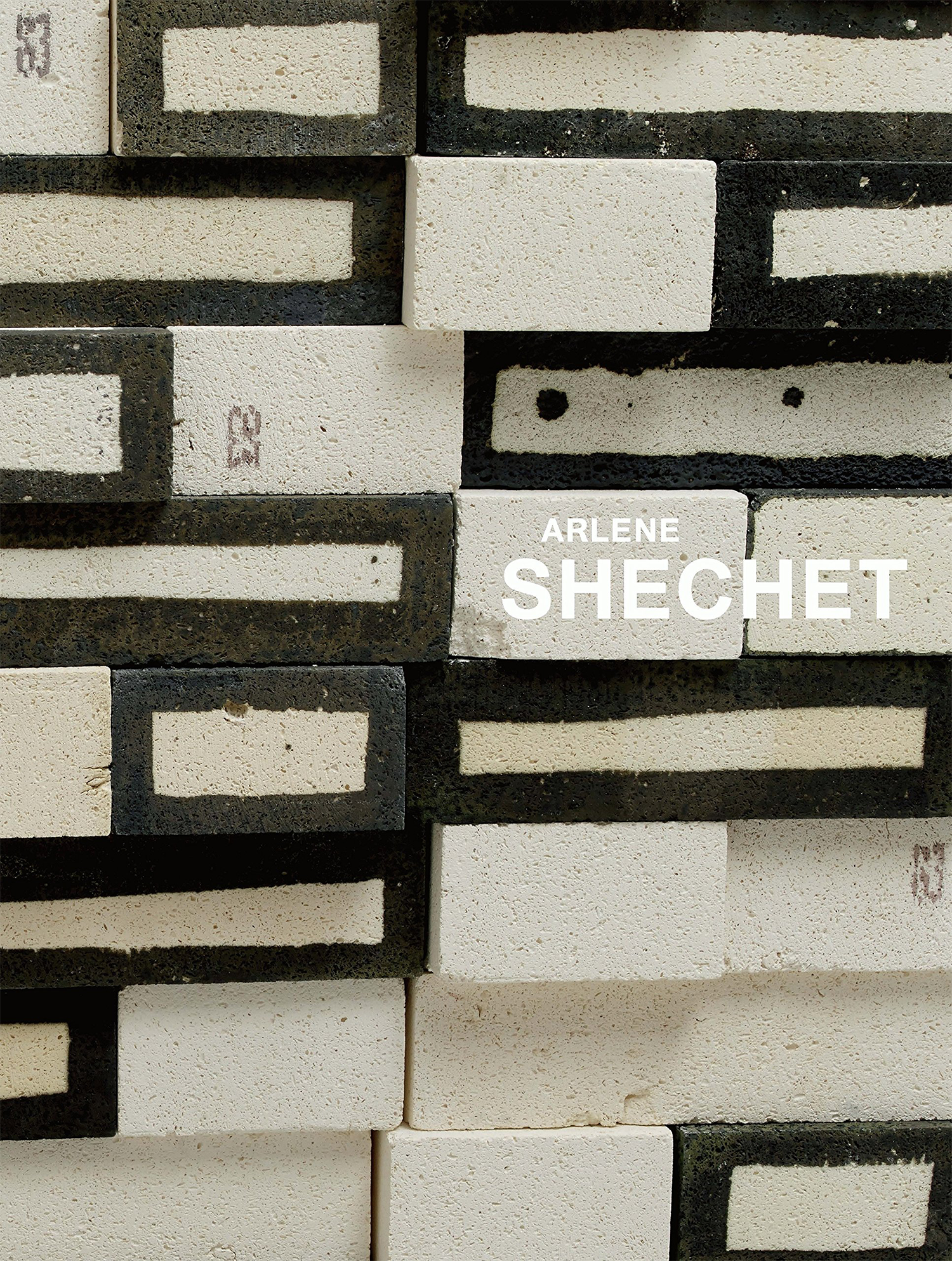
The pedestal has long since occupied a central role in Arlene Shechet’s work. From the early 1990s when she first sited her small, polychrome plaster representations of the Buddha on various wooden plinths, poles, miniature chairs and stands, the base became an integral feature of her sculpture, not just as a support or a required bit of furniture, but as a device that extends the overall meanings of her work. Shechet had been deeply intrigued by the reactions to her deities, especially knowing that they induced a certain uneasiness in the viewer, however faceless and abstracted. (To be sure, the evocation of religious imagery in contemporary art still remains provocative, even as the late modernist period, with all of its prescriptions for formal purity, has long since receded.) But she also knew that her perches and mounts would be equally alienating for those die-hard aesthetes who during the minimalist period had rejected the pedestal for the “expanded field” of sculpture.1 A full decade after she attended art school in the 1970s, Shechet recalls, the pedestal remained “the enemy.”2 Not only was it regarded as an obsolete, retro fixture, but it “ruined things,” interfering with a prevailing vocabulary of terse geometric shapes and the investigation of their relationship to architecture, the floor especially, or the landscape.
Shechet has always loved mining these types of taboos and aesthetic edges: they are a means to assert the quirky, idiosyncratic content that lies at the heart of her project. Like the materials that constitute her work—Hydrocal, clay, glass, and handmade paper, all of which have been associated with craft or the applied arts — she has defied the lingering premises of sculpture, as well as its occasional bent toward theoretical statement. Hence, the bases upon which her heads and abstract forms rest reinforce a sense of precariousness, a trait that differs from the assured monumentality of mainstream sculpture. Early on, she was taken with Joseph Beuys’s Fat Chair, 1964, in which a rickety found object supports a triangle of lard, itself a fugitive substance that alludes to the artist’s inner or spiritual life. Shechet herself has collected chairs and stools that she finds on the streets, though more recently she has begun using plinths and boxlike forms in a range of media to buttress her clay objects. For instance, Tall Tale, 2012, is heaped on a clear plexi stand, while Stories, 2013, is sustained by a heavy steel prop. All these furnishings vary in height; some, like the hard- wood base for No Matter What, 2013, barely rise off the floor, while others, like the plywood pedestal for Even and Perhaps Especially, 2007, tower over the viewer. Within Shechet’s wide range of sub- structures, a few favorites recur: mounded kiln bricks, some richly glazed and painted in vibrantly contrasting colors, and the ready- made sculpture stand.
Shechet’s pedestals are not simply utilitarian addenda. If anything, her contrasting bases, with their primary geometric shapes, are meant to establish a certain incongruity with the objects that they display. Not only do they offset the molded clay pieces, whose wild masses of knobby protrusions loosely reference the body and nature, but they also stabilize, calm, and balance such exuberance and profusion. They are far more architectonic and restrained, after all. As such, her pedestals are disparate yet essential components, part of her overall aesthetic package. Moreover, because these assemblages are not frontally aligned—the viewer must circumambulate them in order to grasp their numerous fissures, sinuous coils, and appendages — the supports become active elements in directing our own movement.
There are a number of historical precedents for wedding a base to its superstructure. Constantin Brancusi, of course, immediately comes to mind: his pedestals are not just furniture, that is, subservient to his sculpture. Moreover, Marcel Duchamp had, a few years earlier, placed a bicycle wheel on a stool in a pre-Dada gesture. But these instances faded from use as the twentieth century unfolded, and eventually the minimalist artists rendered the pedestal unnecessary.Shechet has often referred to Philip Guston, who once worked in close proximity to her studio in Woodstock, New York, as a “fairy godfather,” an artist who similarly tired of the modernist expectation that the languages of abstraction remain self-perpetuating. Just like Guston’s late painting, which with its juxtapositions of highly divergent yet autobiographical imagery,
Shechet’s sculpture thrives on the same kind of absurdity and paradox. Her eccentric combinations of ceramic objects with their unlike bases are similarly enigmatic, sometimes even purposefully ludicrous. But they are also revealing of aspects of her self and the life that takes place in her studio. In So and So and So and So and So and On and On, 2010, with its two pink, bulbous, Buddha-like heads poised on a column of kiln bricks—some differentiated by black outlines—she makes explicit not only her artistic allegiance to Guston, but the process by which these forms are realized. Along with the sculpture stand — that ubiquitous stool required to mold, paint, and decorate clay—the kiln, too, has been folded into her lexicon of furnishings here, all the while upending and confound- ing our received notions of the pedestal.