Porcelain Rooms
By Meredith Martin
Arlene Shechet’s recent installation Meissen Recast filled two rooms at the Museum of Art at RISD: a larger contemporary art gallery and a smaller Porcelain Gallery, the latter a wood-paneled period room built to house the museum’s collection of historical porcelain figures. Experiencing these galleries and the objects they contained reminded me of being in an eighteenth-century garden— specifically a type of French Rococo garden known as a jardin anglo-chinois. The term denotes the English and Chinese design elements that inspired its creation and distinguished it from the rigidly formal, geometric jardin français. There was, in Shechet’s exhibition, a similarly tantalizing use of walls and vertical elements to both hide and frame views; a playful combination of symmetry and picturesque variety, inversion and reflection; and an overall emphasis on surprise and discovery that was fundamental to Rococo aesthetics.
Eighteenth-century gardens, in both China and Europe, aimed to connect with visitors on a personal, visceral level and to invite contemplation of nature, art, and the self. Shechet’s installation likewise prompted a meditation on her work, especially its witty yet profound engagement with historical ideas and precedents. The artist’s work, it should be noted, did not consist solely of her Meissen-inspired porcelain sculptures, which she made during a residency at the 300-year-old Germany porcelain factory in 2012 and 2013. It also included her carefully crafted display and reinstallation of RISD’s extensive collection of authentic Meissen porcelain — nearly 200 pieces in all — alongside her own creations.
Shechet’s decision to showcase the entire collection of Meissen objects, many of which were packed away in museum storage, references the seminal Raid the Icebox exhibition that Andy Warhol designed for RISD in 1969. Since that time, many artists have plumbed museum storage or rearranged parts of a permanent collection in order to initiate conversations between historical objects and contemporary environments or concerns. (In a way, this practice is the inverse of another prevalent trend: the display of contemporary art in historical settings.) Shechet added another layer to these curatorial interventions by juxtaposing her own sculptures with their historical counterparts, in a way that amplified the significance of each. Ultimately, Meissen Recast offered productive new ways of mining, restaging, and enlivening the past, while underscoring its relevance for the present.
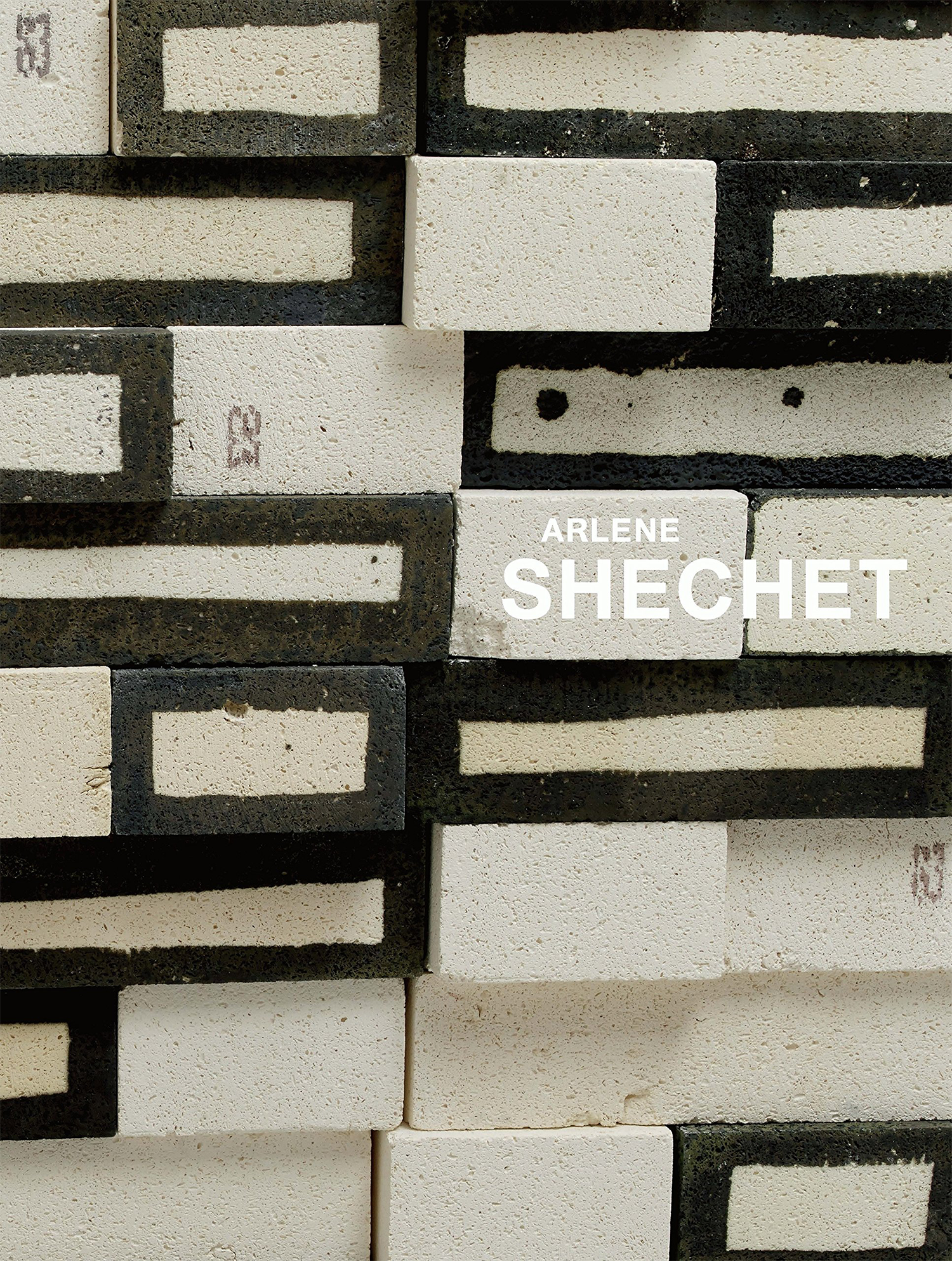
Shechet’s channeling of history in the exhibition was not so much formal or morphological as conceptual. None of her porcelain pieces could really be mistaken for a Meissen object, primarily because they adapt the industrial plaster molds that the factory uses—and has used since its founding on the outskirts of Dresden in 1710—to craft its renowned porcelain. During her residency, Shechet became fascinated with these molds and other aspects of porcelain production that are normally concealed in the finished product, and her work centers on revealing this unseen or suppressed labor and elevating it to the level of fine art. With their visible seams, cracks, drips, and inventory numbers, Shechet’s sculptures bear little resemblance to the historical Meissen objects that were installed next to them in the RISD exhibition. However, their privileging of the sculptor’s hand or creative process, which we tend to associate with modern and contemporary developments in the medium, actually emerged in the eighteenth century, and is evident in the widespread appreciation for terracotta clay sculpture at that time. As the French art critic Denis Diderot wrote in his Salon de 1765, “the artist throws his fire into the clay [by which Diderot meant the sculptural “sketch”], but boredom and coldness take over when he gets to the stone.”
In the eighteenth century, fired clay was thought to have a living, breathing quality that other sculptural materials lacked, a quality that extended to porcelain as well. Today it is difficult for us to conjure the sense of magic, mystery, and modernity that eighteenth-century audiences attributed to porcelain tableware and figures: these are, after all, the objects that many of us muse- um-goers pass by without a second glace, or associate with the tchotchkes on our grandmother’s mantlepiece. Part of this magic had to do with the material itself: although porcelain had been manufactured in Asia for centuries, and had become highly coveted among European collectors, no one in Europe could figure out how to make it until an alchemist employed by Meissen’s royal patron finally determined the formula in 1709.
For years, Meissen attempted to guard the secrets of porcelain technology, while simultaneously flaunting its achievements in ever-more ambitious creations. Shechet’s installation cannily captured that blend of secrecy and showiness through dramatic lighting, strategically placed supports, and suggestive figural arrangements, several of which revealed that Meissen designers did not so much efface labor as displace it onto the bodies of their porcelain figurines. Many of these figurines depict Saxon miners, woodcutters, and other workers involved in porcelain production, and in one of the vitrines of the Porcelain Gallery Shechet posed them proudly together, or atop her own cast kiln bricks, as a way to reassert their identity and importance.
Shechet’s display also drew attention to the high percent- age of Asian and Turkish characters among these eighteenth-century Meissen statuettes, a connection that alluded not only to porcelain’s Eastern origins but also to its cross-cultural networks of circulation and exchange. In the Porcelain Gallery, she gave particular pride of place to a grinning Meissen “buddha” that she sat next to a mirrored disco ball and one of her own works representing the first Asian-inspired Meissen vase. The tripartite arrangement seemed to suggest how eighteenth-century European consumers alternatively celebrated, engaged with, and neutralized the threat of the foreign through these deceptively simple porcelain wares. Sometimes they did this in the form of the dessert, an elaborate eighteenth-century table arrangement featuring Meissen figurines set amid fictive ruins, garden buildings, or exotic temples made of spun sugar and marzipan. Gesturing to one of these desserts in her reinstallation of the famed Meissen “monkey band,” Shechet pushed the acrylic box containing these simian musicians out at a rakish angle, seemingly to emphasize their Baroque theatricality as well as their spirited rejection of the classical rules of decorum, symmetry, and hierarchy between man and beast.
Porcelain monkeys that assume human characteristics, a Buddha that looks like a ventriloquist’s dummy—many of the historical Meissen pieces in Shechet’s show call to mind the eigh-teenth-century conceit of inanimate objects coming to life, or, conversely, of people transforming into objects. (Several of Shechet’s sculptures evoke these ideas as well, among them Dancing Girl with Two Right Feet, a quasi-female figure who appears to be morphing into a rosebush.) Porcelain was a favorite subject of such literary and artistic imaginings in the eighteenth century, perhaps because of its association with a new economic culture in which luxury commodities threatened to substitute for or overwhelm the self— particularly the feminine self. To give just one example, Le Ballet des porcelaines, a French ballet-pantomime written by the comte de Caylus in 1740, opened with ornately dressed dancers twirling around a large porcelain teapot at the front of the stage until they themselves transformed magically into porcelain vases.
Long before the tales of E. T. A. Hoffmann, or the writings of Sigmund Freud, eighteenth-century German audiences thrilled to talking dolls, automata, and tableaux vivants. Some echo of that obsession appears in the short silent film Meissen Porcelain! The Diodattis’ Living Sculpture at the Berlin Conservatory (ca. 1912–14), in which costumed actors and actresses pose stiffly as multi-figure Meissen sculptures and then, after a few seconds, break the illusion and bow to the audience. Playing on a loop in Meissen Recast, the film encapsulated Shechet’s own project of animating the past and of accessing it through a range of conceptual and aesthetic filters.
Finally, Shechet’s installation, particularly in the contem- porary gallery, loosely resembled a specific type of historical inte- rior known as a “porcelain room.” Porcelain rooms emerged in the late seventeenth and eighteenth centuries alongside a craze for Asian “white gold” (as porcelain was then known) in Europe, and several examples were built in Germany, including the Porzellankabinett at the palace of Charlottenburg in Berlin. (The room was severely damaged in World War II, and has since been restored.) Its walls are covered with hundreds of Asian porcelain plates, cups, and vases set into the molding or arranged on gilded brackets, surrounded by mirrors, swooping dragons, Buddhas, and stucco Chinese mandarins who offer tea trays to guests while wear- ing inverted Imari bowls as hats on their heads.
Porcelain rooms embody not only a new era of capital- ist accumulation, but also a breakdown of traditional boundar- ies: between East and West, ornament and structure, objects and subjects. Shechet’s work, too, blurs these categories. Her interest in porcelain rooms stems partly, she has said, from their use of functional items, like plates, as decorative “wallpaper”—and her RISD exhibition similarly blended the artful and the utilitarian, in addition to questioning the historical relevance of these oppositions. But surely Shechet’s attachment to such spaces lies also in their uncanny ability to amaze, disorient, and resonate powerfully with visitors: to offer a glimpse of a world turned upside-down, or a time not so long ago, when porcelain was king.