Paper and Impermanence
By Peter Lamborn Wilson
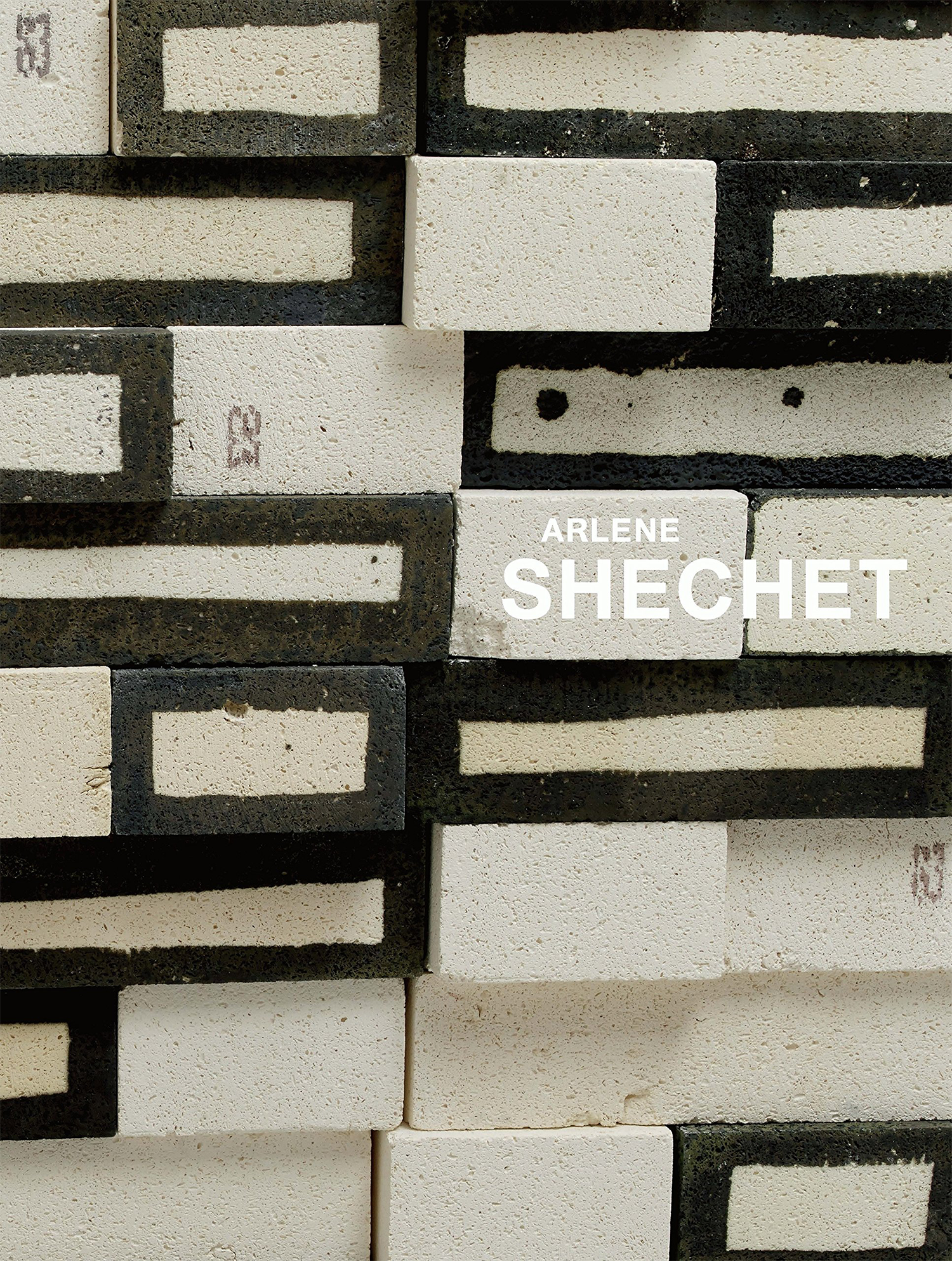
Arlene Shechet’s brilliant work in handmade paper illuminates a strange and unsuspected link between Esoteric Buddhism and the Western esoteric tradition known as Hermeticism.
Hermeticism, named for the Greek god Hermes (who is both the planet Mercury and the mineral quicksilver) includes all the occult arts and sciences of the “West”—meaning Egypt, Greece, Rome, Europe, India, and Islamdom. Alchemy is the most famous of these arts.
Papermaking itself can be called one of the Hermetic secret arts—an arcanum. Discovered by the Chinese, it traveled via the Silk Road to the Sufis of Persia and Turkey, and thence to European alchemists who, like Paracelsus, studied in Istanbul. Papermaking can be seen as a “transmutation” of “base matter” (old rags and such) into a higher form; and Hermes is, of course, the god of writing and all its implements.
Hermes is also in a sense powerfully related to the Buddha, even perhaps “identical” with him. This secret is known only to a few students of the history of religions.
The Sanskrit name of the planet Mercury is Budh, literally “Wisdom.” Mercury has always been identified with Thoth, the Egyptian god of writing and the (other) occult sciences, who is in turn the same as Hermes of the Greeks, also god of writing and occultism. The Hindu Budh, as patron of esoteric wisdom, herbal- ism, and other Hermetic topoi, must also be seen as a form of both planet and god.
The mother of Hermes was Maia (a star of the Pleiades). The mother of the Buddha was Maya. The mother of Budh was Tara, “the Star,” who is also one of the most popular goddesses of Tibetan Buddhism. So we can safely claim Gautama Buddha as a manifestation of the Mercuric principle. I don’t know if Shechet is aware of all these secret identities but I feel them glowing under the surface of her work.
As the late, lamented art critic and classics scholar Thomas McEvilley pointed out in his masterpiece The Shape of Ancient Thought (2001), such links between India and Greece “go back” to deepest Indo-European antiquity.
Eurasia under the sign of Hermes can be seen as one big unified culture-area, from Scotland to China. Alchemy, the great- est of all Hermetic arts, uses the same sulphur/mercury symbolism in China, Greece, India, the Islamic world, and Europe. It is in fact the same science in all these places. How and when it was transmitted we do not know—but it was.
Another example of a “meme” that floated between East and West, the mandala, is found in Persia as the mandal, or “magic circle.” The magic lore of the Magi drifted West and created the ceremonial circle of European occultism, in which angels and demons can be invoked, as, for example, in Cornelius Agrippa’s Three Books of Occult Philosophy, or the Faust legend, or the spells of the nineteenth-century Order of the Golden Dawn. Moving East, the mandala informs Vajrayana Buddhism from India to Japan, and is especially elaborated in Tibet, where it can also be used to evoke tutelary deities and demons.
The mandala can also be defined as a design or floor plan for a temple or ideal “palace” inhabited by the deity or bodhisattva it incarnates. This fact relates the mandala to the stupa, a kind of tower built by Buddhists to contain sacred relics and serve as a pilgrimage site. Borobodur and Sanchi are famous examples of elaborate complexes of stupas and temples. (There are stupas in upstate New York as well!) In a sense, the stupa is a 3-D mandala. The word “stupa” relates to an Indo-European root that provides Sanskrit terms for “tuft of hair or topknot,” “crown,” “heap” (as in a pile of grain or a sacrificial mound), and “column.” In Greek, the word “stupos” means “stem, stump, block,” and, amazingly enough, in Icelandic, “stupa” means “tower.”
The stupa, having what might be called a “crown chakra” (often symbolized by a sun/moon symbol on the spire) and a “stem” or backbone, not only forms a magical circle when viewed from above, but also resembles a human body when seen straight on— particularly the “diamond body” of the Buddha himself.
Shechet uses plaster and cast paper to produce stupa-like objects; some are “vase”-like; some are Buddha-shaped. She also creates flat papers (not drawings, but designs laid out and realized as part of the papermaking process) that look like “blueprints” of mandalas-as-architecture that the deities themselves might envision. These mandalas, as well as many of the shaped pieces, are colored blue-and-white, and remind us irresistibly of Chinese porcelain; Shechet herself also works in porcelain.
Like silk, the art of porcelain remained a Chinese secret for centuries. By the Renaissance, European aristocrats had become obsessed with collecting “china” and were desperately trying to figure out how to make it. They failed. Porcelain grew to be more valuable than gold.
So naturally the alchemists began to work on the arcanum, or the secret of porcelain.
We are finally beginning to learn that alchemy cannot simply be dismissed as stupid superstition. We know that lead can be transmuted into gold (in a cyclotron!), but we also know that Newton and Boyle practiced alchemy and that “modern science” is in some ways a prolongation of alchemy. In fact, it was an alchemist who in 1709 discovered the secret of porcelain.
In that year, Johann Frederick Böttger injudiciously boasted that he could create gold, and ended up imprisoned in a tower by King Augustus “The Strong” of Poland, Elector of Saxony. Make gold for me, the king told him, or I’ll never let you go. Inspired by another alchemist (a friend of Leibnitz) named Von Tschirnhaus, young Böttger offered instead to make porcelain, which Augustus loved even more than gold. Using alchemical the- ory, the two scientists experimented with various “sulphurs” and “mercuries,” and with new designs for high-temperature athanors, or kilns, and eventually hit on kaolin clay and alabaster which, in the ratio of 9:1, melted into one another under intense heat and “transmuted” into a porcelain as beautiful as any Chinese or Japanese import. The famous porcelain factory at Meissen was then founded, and eventually made a fortune for Augustus. But the king wasn’t satisfied, and Böttger remained a prisoner until he died, still searching vainly for the secret of gold.
Shectet’s work in paper—and porcelain as well—seems to me to fall aesthetically under the rubric of alchemy. Not only is all art a form of transmutation (as Marcel Duchamp insisted), but Shectet’s art in particular emanates a kind of Hermetico-Buddhist aura. In the aleatory “imperfections” of her mandalas and in her buddha-statues, we see one form melting into another, like sulphur and mercury, not only to produce a new form but to transcend all form in an image of impermanence.
Everything Arlene Shechet does is, literally, magic.