Re-Make/Re-Model - Arlene Shechet’s “Meissen Recast”
By Dominic Molon
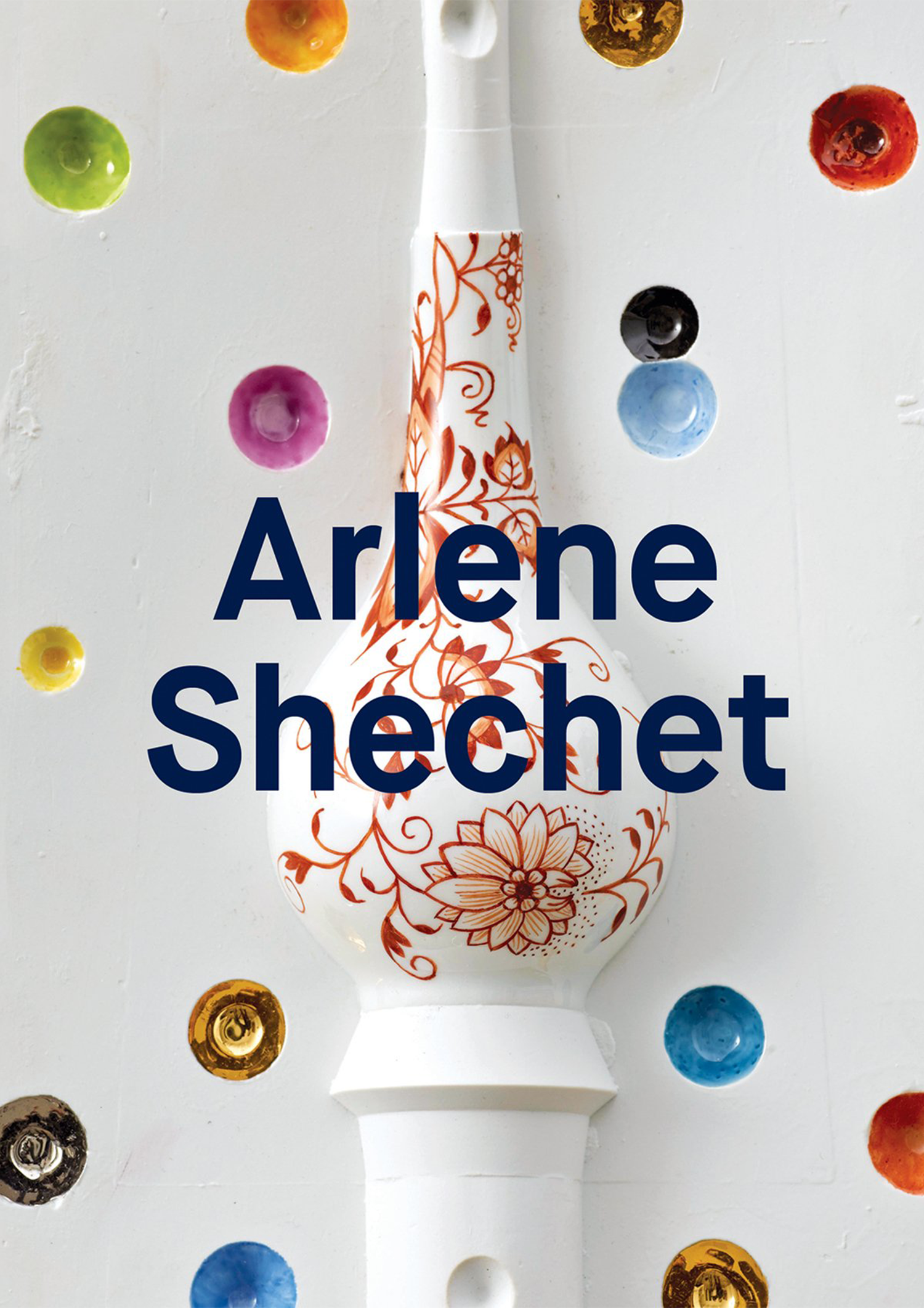
The most successful cover versions of songs take the appeal of the original and develop it into something novel and idiosyncratic. They subvert our comfort with the perfect familiarity of an old favorite by introducing new elements and stylizations that prompt us to revisit and reconsider our relationship to the original. The worst covers possess a cloying, cynical sheen of overproduction that eradicates the beautifully “human” imperfections of the original (consider, for example, Rod Stewart’s saccharine, if popular, version of Tom Waits’s poignantly damaged “Downtown Train”). Arlene Shechet’s project “Meissen Recast” of 2012–13 “covered” classics of decorative art and design in a way that underscored their brilliance through rigorous and inspired reinterpretations. It consisted of a residency at the centuriesold Porzellan-Manufaktur Meissen (Meissen Porcelain Manufactory) in the eponymous town in eastern Germany, near Dresden, and a subsequent exhibition, in spring 2014, of the resulting works alongside historical examples of Meissen production from the collection of the RISD Museum in Providence, Rhode Island. In “Meissen Recast,” Shechet doubled down on her reassessment of traditional approaches to the facture of porcelain with radical departures from what are usually considered appropriate methods of presentation and display (as when she installed a stack of Meissen dishes in a vitrine at RISD, rather than just one isolated, precious example). Like that rare cover that exceeds and perhaps even supplants the original song in our affections, Shechet’s project highlighted the precious and strange sensibility of the original Meissen objects through irreverent sampling of figurative details, incorporation of molds and manufacturing by-products, and highly unorthodox placements and juxtapositions of the factory’s old, and her new, works.
The Porzellan-Manufaktur Meissen was established in 1710 to sate the strong demand in Europe for so-called white gold, the means of porcelain’s production being a zealously maintained secret of its Asian manufacturers. The factory was founded under the auspices of Augustus the Strong, elector of Saxony and king of Poland, who had engaged the alchemist Johann Friedrich Böttger to discover the formula for porcelain. Over the next twenty years, two Meissen artisans in particular, Johann Gregorius Höroldt and Johann Joachim Kändler, developed painterly and sculptural techniques, respectively, that still form the foundation for Meissen production to the present day. Kändler was particularly influential in his development of the content of the sculptural objects, which ranged from animals and birds to characters of the Italian commedia dell’arte to contemporary representations of the German volk, from craftsmen to merchants’ wives to court revelers. To preserve and maintain this aesthetic legacy, Meissen today employs skilled craftspeople who master one specific part of the overall process— be it dipping bowls in glaze or signing the end products with the factory’s trademark crossed-swords insignia. This collective repetition for the sake of hallowed tradition is diametrically opposed to Shechet’s determination to turn conventional approaches inside out (although her description of her working process as possessing an “alchemical” quality does evoke the factory’s origins in Böttger’s experiments).1 The friction between corporate and individual creative entities in “Meissen Recast” echoes the shifting cultural and philosophical expectations of artists over the past three centuries, which have culminated in the clear imperative placed on innovation and “originality.” Even as Meissen’s reputation is built on its staunch dedication to traditional methods and standards, Shechet’s work is increasingly celebrated for its incorporation of deeply personal references, catholic tastes, and translation of psychological dynamics into material form.
That Shechet, whose practice explores and shatters the limits of the ceramic medium, should have found herself invited to take up residency at Europe’s first and most prestigious site of porcelain manufacturing is hardly surprising. For years, Meissen has, alongside France’s Manufacture Nationale de Sèvres and Spain’s Lladró, invited contemporary artists to realize projects on its premises. Ideally, such residencies and collaborations not only facilitate or shift aspects of the individual artists’ working processes but also demonstrate the factories’ acknowledgment of, adaptability to, and perhaps even influence on the styles and sensibilities of the present day. In “Meissen Recast,” Shechet first compromised the purity of the Meissen process by deliberately using “incorrect” techniques (albeit with professional rigor and attention to detail), then challenged the expected mode of porcelain’s aesthetic appreciation through her installation strategy, which foregrounded the peculiar nature of such Meissen subjects as a full band of monkeys playing instruments (opposite) and bizarrely outfitted Buddha figures (pp. 40–41), the latter reflecting the signature Buddhainspired works that formed a turning point in her own career.
Shechet addressed the question of working at the illustrious Meissen establishment by implicitly acknowledging the inherent mastery of its past and present production and not asserting the same type of mastery herself—deciding instead either to incorporate fragments of its figures into simple or elaborate conglomerations of unsettling part-objects or to work with the factory’s humble molds and discarded remnants. In the former instance, some “finished” Meissen human and animal parts are seamed together or appear to emerge from viscous or baroque masses of form, suggesting more polished (and less terrifying) manifestations of the kind of hybrid creatures found in horror films such as John Carpenter’s The Thing (1982) and Ken Russell’s Altered States (1980). Other works de- and reconstruct, flatten, fold, and twist familiar functional objects and vessels produced by Meissen, such as serving bowls, plates, cups and saucers, and vases, into every conceivable (and previously inconceivable) shape and form. Shechet simultaneously exaggerated and aestheticized these gestures by applying decorative paint or gilding to unexpected sections of the objects. She did the same when foregrounding the molds used to make various Meissen objects, conferring upon them the status of objects worthy of adornment and calling even more attention to their customary role as the means to an end rather than ends unto themselves. Going even further than the mold-related works in this respect are those featuring rectangular blocks perforated with a square grid, which are based on the form of extruded clay left over from the casting process, and those incorporating the sprues and imperfect handles, spouts, and other details that Shechet reclaimed and redeemed by developing them into new forms.
The works Shechet produced for “Meissen Recast” continue methodologies from earlier in her career. The obvious specificities of the Meissen-derived subjects and materials notwithstanding, the frequently unpredictable alternation between matte and glossy (glazed or gilded) surfaces remained consistent, as did the sense of play informing the development of the works and the presentational assembling of the Meissen works around them. The manner in which Shechet engages the physical bases of her works as well as the space surrounding them characterizes both the objects created at Meissen, such as Mix and Match (2012; p. 119), and larger, torqued sculptures that twist upward and outward, such as Anything and Always (2008) and Just Remembered (2010; p. 29). (A comparison to the sense of sculptural movement and transformation of materials in Bernini’s Apollo and Daphne and Pluto and Proserpina [p. 30] is perhaps not too presumptuous here.) The incorporation of basic materials of production, such as the glazed firebricks of Tattletale of 2012 (which also appeared in a longer, narrower form throughout the “Meissen Recast” installation), anticipated the use of scavenged and otherwise appropriated phenomena from the Meissen foundry’s production process.
The treatment of the base of a given work as integral to its completion and to its meaning is possibly the most critically relevant component connecting Shechet’s past work and the “Meissen Recast” project. The circumstances of the RISD Museum presentation, which was split between the nineteenth-century glass-fronted wood cabinets of the Lucy Truman Aldrich Porcelain Gallery and the tempered postmodernity of the late-1980s Upper Farago Gallery, required that the overall footprint of the newer space, especially, be radically reconsidered and transformed. Shechet’s reinstallation of the Porcelain Gallery’s
cabinets realized her intent to “enhance and undermine the preciousness of the materials”2 while subverting traditional museological approaches to porcelain display through the introduction of mirrored surfaces (including a small disco ball) and arrangements that repositioned the Meissen pieces as “role players” in the overall scheme of the show rather than as the primary objects of delectation. Such interventions transformed the otherwise historically inert details of the Porcelain Gallery into active constituents of the exhibition. The already “contemporary” Upper Farago space, conversely, required a more substantial intervention to overcome its neutral “white cube” sensibility—save the pitched ceiling, with its wood paneling and allowance for natural light, of which Shechet made welcome and overdue use. Both the perimeter and the specially designed freestanding walls were painted a dark battleship gray to provide a stark and somewhat industrial contrast to the pearlescent white of the Meissen objects and many of Shechet’s works. An inventive use of Plexiglas over openings in the freestanding walls and as pedestals developed out of the necessity of providing protection for the historical objects but added a compelling visual and material layer to the installation, especially when other objects were displayed inside the Plexiglas base. Finally, the west and east walls of the gallery, respectively, featured “positive” staggered shelving and “negative” recessed niches on which complementary objects were placed. This conceit not only heightened the sense of the installation as an “overall work” but also subtly alluded to the dynamic of positive and negative space used when casting porcelain objects from molds.
Without this strategic transformation of the two gallery spaces, “Meissen Recast” might have been a fairly doctrinaire juxtaposition of traditional objects with their radical reinterpretations. Shechet’s more engaged spatial and conceptual intervention, however, simultaneously problematized aspects of her own works, their older counterparts, and the relationships between them. By enveloping the Meissen objects in the totalized logic of her installation, she prompted intensified scrutiny and consideration of the way the objects are fetishized in more conventional presentations. Yet their diminished “preciousness,” far from depreciating them, elicited a renewed contemplation of their more esoteric attributes and qualities (and, in the aforementioned weirdness of Monkey Band, of their subject matter). The Meissen objects’ association with
Shechet’s sculptures also encouraged the kind of rigorous interrogation of their intent and relevance on their own terms that is characteristic of the reception of “authentic” works of avant-garde art. If a mold or a sprue can be recast and reconsidered for its no-nonsense, practical simplicity and for its significant contribution to the creative process, it follows that the ornate serving bowl that it produced might now look gaudy, impractical, and extraneous by contrast. This democratization of objects within “Meissen Recast,” evoking the photographer Wolfgang Tillmans’s 2003 Tate Britain exhibition “If One Thing Matters, Everything Matters,” also managed to shift an appreciation of the Meissen works away from their lavish affect and toward the more mundane circumstances of their facture and the equally “produced” nature of their seductiveness as luxury objects.
Shechet’s decision to include in “Meissen Recast” a clip from the 1912–14 silent film Meissner Porzellan! Lebende Skulpturen der Diodattis im Berliner Wintergarten (Meissen Porcelain! The Diodattis’ Living Sculptures at the Berlin Conservatory; see pp. 92–93) underscored the theatricality of the exhibition design, with its “staging” of objects in various evocative arrangements. The comic levity of the film’s tableaux vivants, which were derived from Meissen figural scenes— including The Cherry Pickers (1753–65), in the RISD Museum’s collection—emphasized the sense of “play” that informs both Shechet’s experimentation with forms and methods and her approach to installation. The playful juxtaposition of her sculptures with the RISD Museum’s Meissen objects evoked the best song covers’ intertwining of serious reverence for the original with a genuine and palpable sense of fun in the performance—something that characterized even Nirvana’s haunting take on David Bowie’s “The Man Who Sold the World,” recorded in November 1993 for the MTV series Unplugged. The cover, which poignantly foreshadowed the singer Kurt Cobain’s death five months later, was leavened by his joking “guarantee” to the audience that he would “screw this song up.” Shechet’s maximization of both the Meissen factory’s and the RISD Museum’s resources and her dynamic reimagination of the Meissen forms convey the astonishing rigor and intensity with which she approached the project, while the wit and cleverness of touch in her individual works and in the presentation of the whole betray a real sense of delight in every part of the process. Unlike Cobain and Nirvana, Shechet intentionally “screwed up” both the interpretation and the display of the Meissen works in “Meissen Recast,” yet in so doing, she established critical new terms for porcelain both as a medium and as a cultural phenomenon.